Oxalis pas-caprae – yellow wood sorrel, Bermuda buttercup, yellow woodsorrel, sourgrass
Wood Sorrel, or Oxalis, is a common plant in the northern hemisphere, and easily passed as a insignificant weed. In Crete the hills are covered with these little yellow flowers in the spring time. The flowers are nyctinastic, meaning they open to sunlight, so the yellow is multiplied on a sunny day. Oxalis grows in the olive and citrus groves, and it creates a lush green carpet, inhibiting the growth of other more difficult weeds. It’s also a favorite to honey bees.
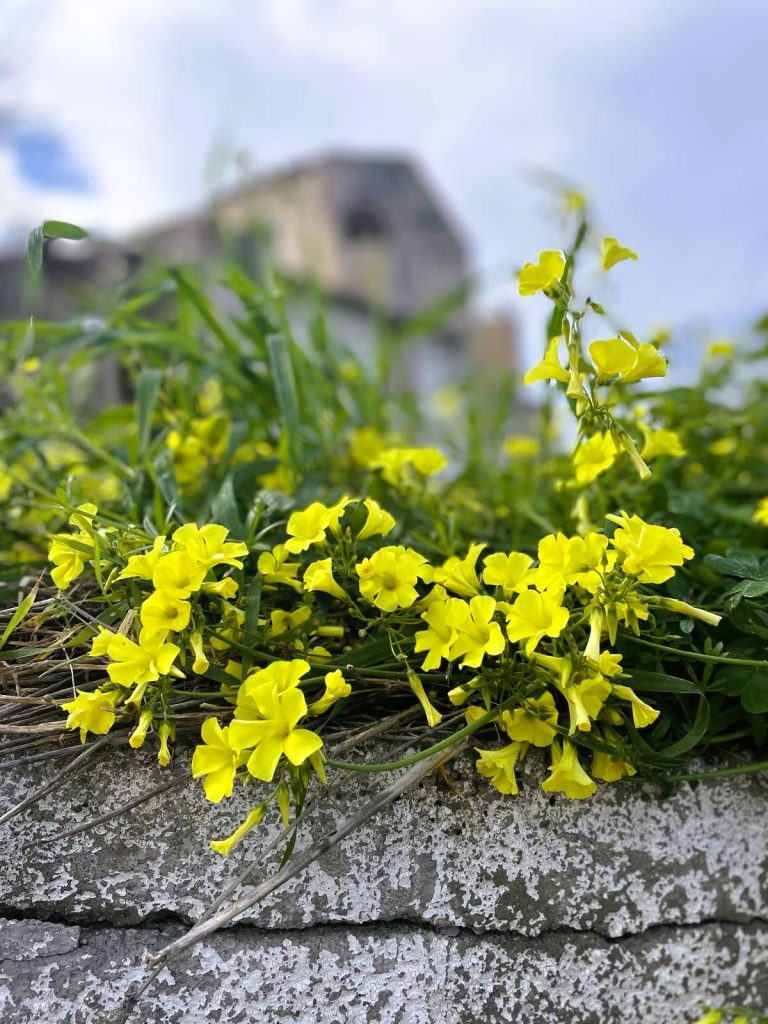
In Greek, the plant is called ξινήθρα (xinithra) or οξάλη (oxali) which implies acidity, as it is it known for having high concentrates of oxalis acid. Among other things, oxalis acid is used as a bleaching agent and in the world of natural dyes can be used to discharge dyes on fabric. It also contains vitamin C, and is edible in small quantities. Its delicate lemony flavor is perfect spring salads and some cultures it’s used in soups, sauces and pies.
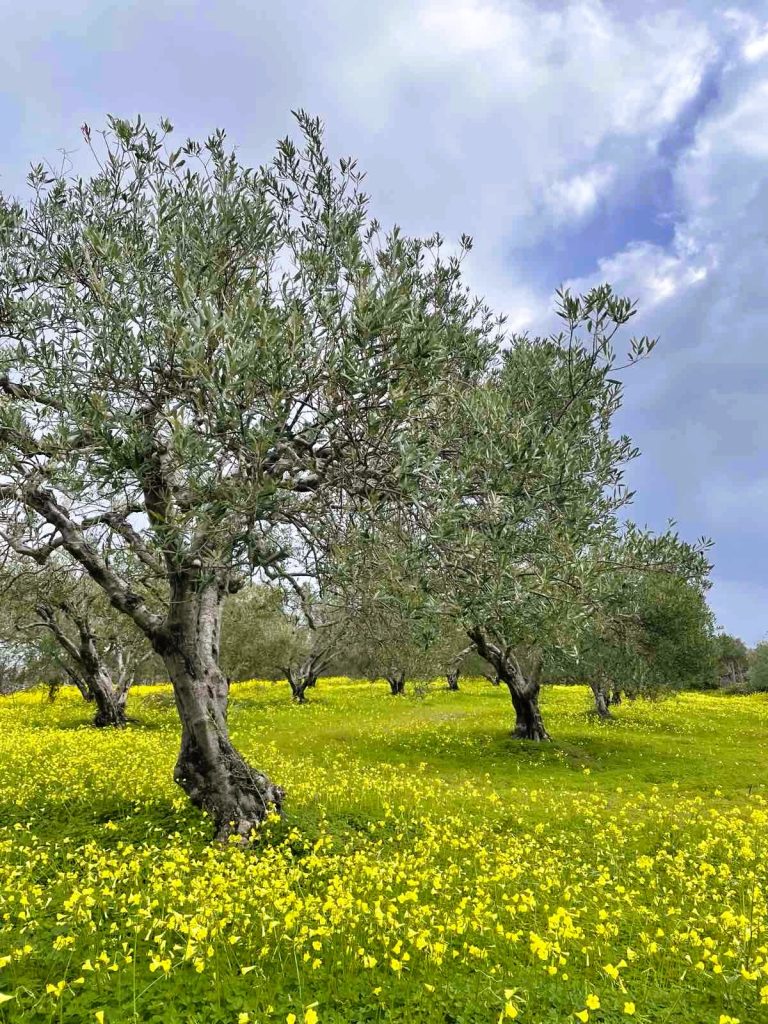
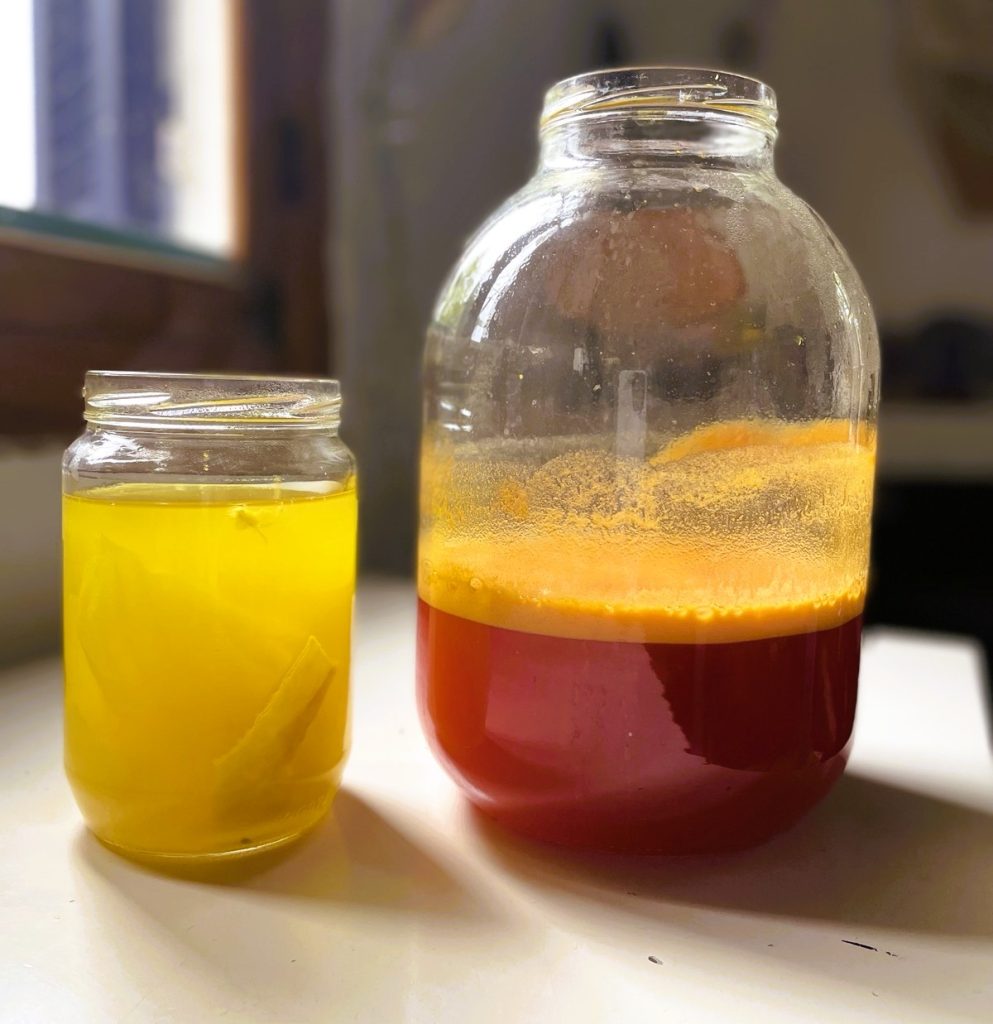
To extract the color from oxalis, I collected flowers and stems to create a dye. The flowers can be removed and used separately, but I have found it’s more time consuming and doesn’t affect the results of the dye if you use the stems and leaves as well. I filled a large jar with plant material and hot water, and allowed the flowers to steep for a couple of days. Even after five minutes, there was a hint of the color that was being created.
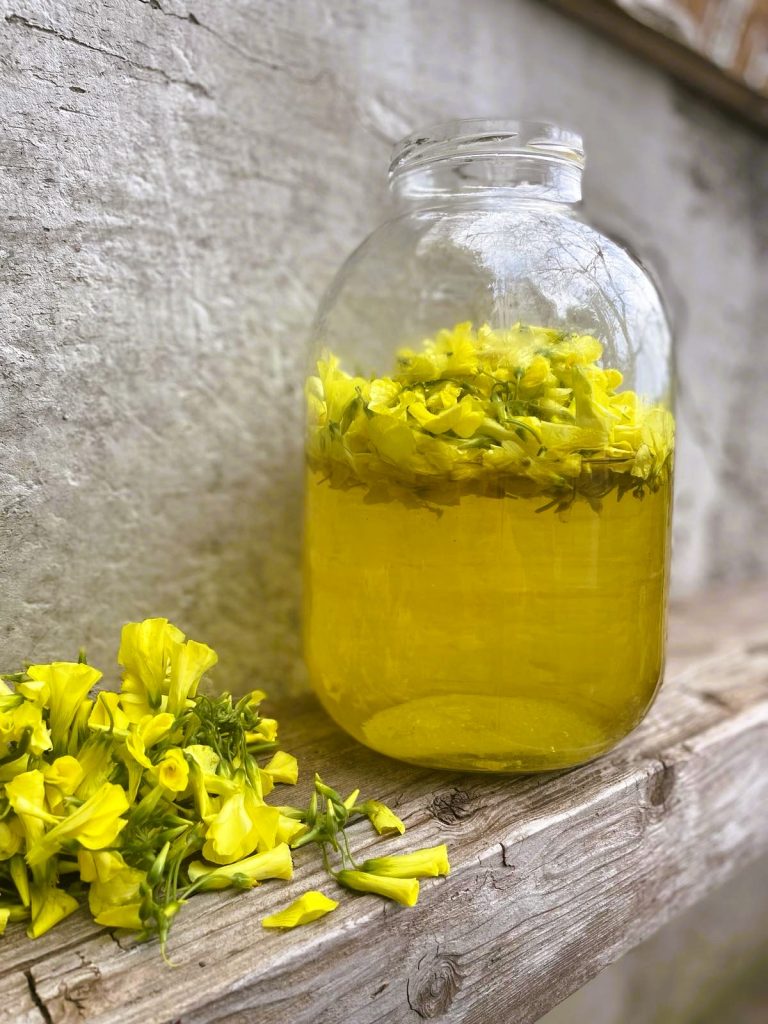
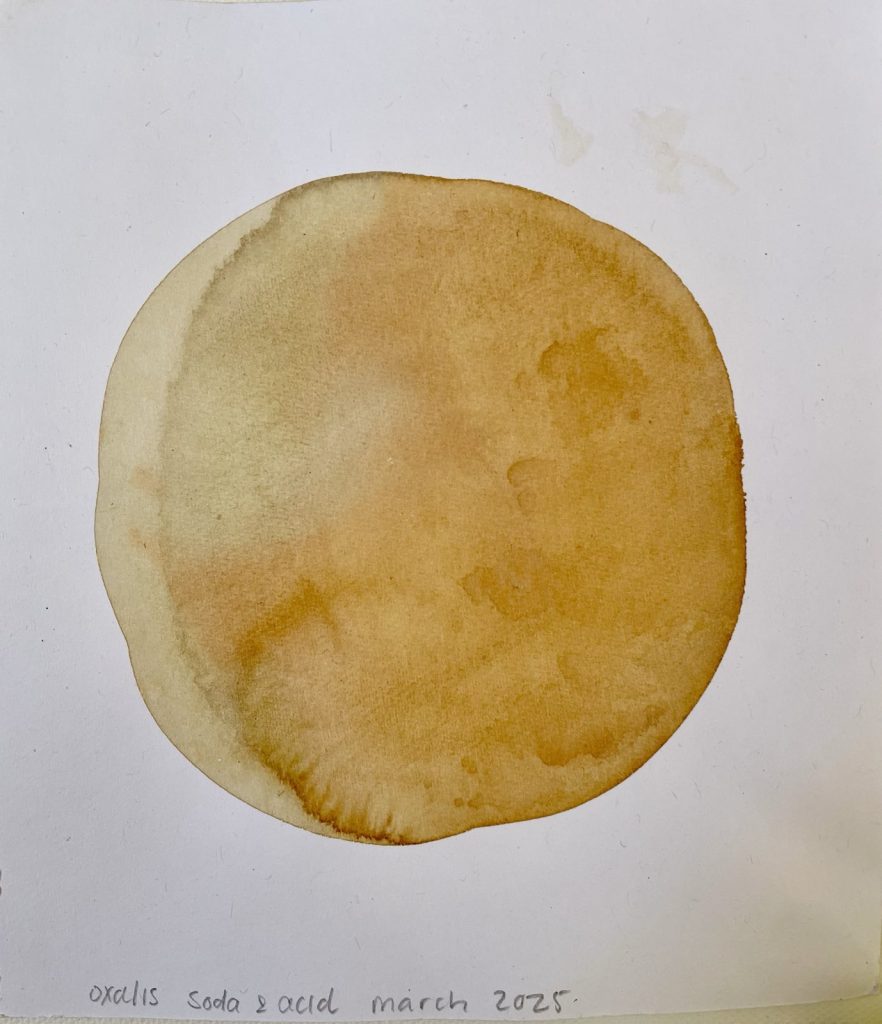
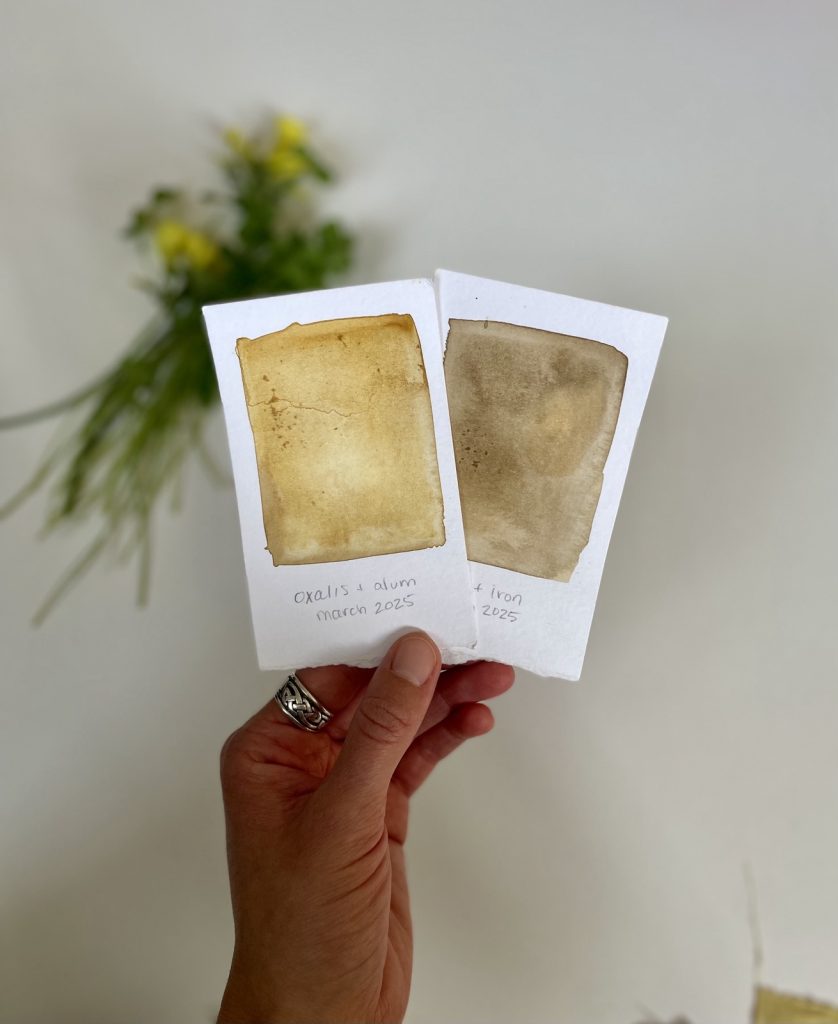
After a few days, I then strained off the spent flowers and returned the liquid to a jar to add my fabric samples. Since I was dyeing a small amount of fabric, I had a decided to make the extra dye into a lake pigment to use in the future for watercolors and pastels. Some natural dyes are very sensitive to pH change, and I suspected Oxalis would be no different. The dye turned a deep orange with the addition of washing soda during the laking process.
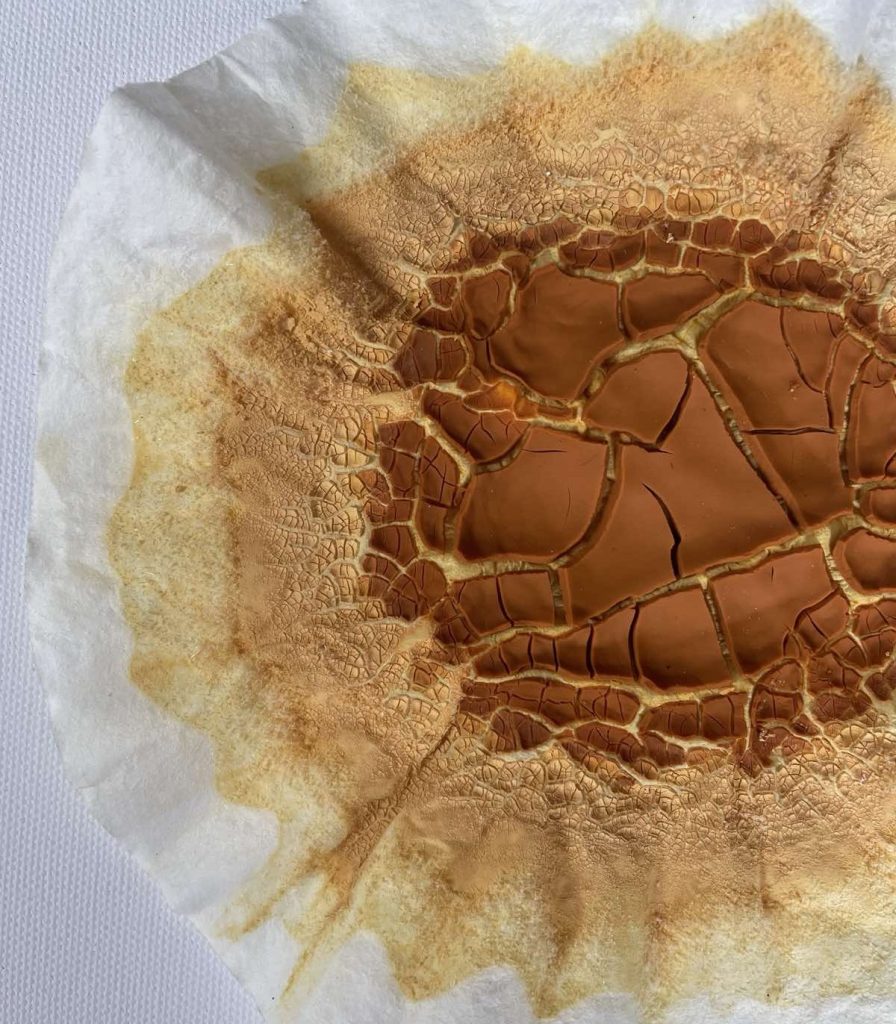
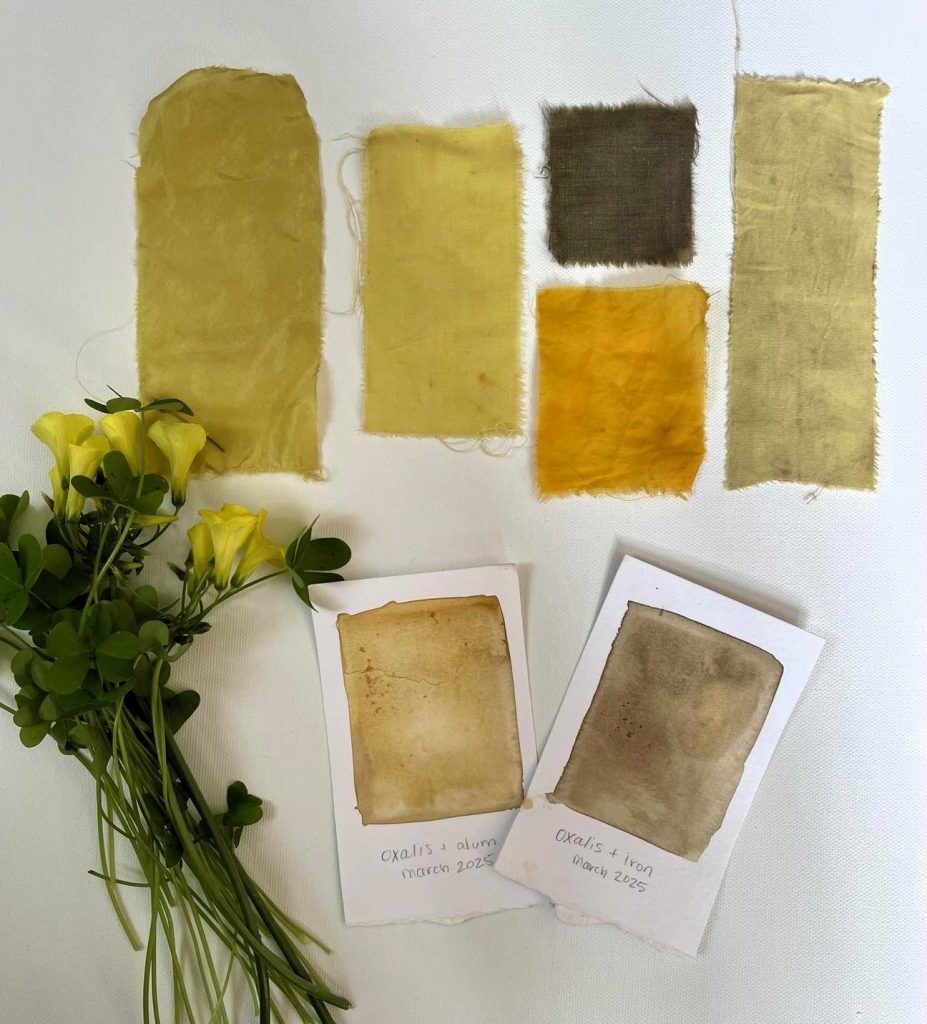
I decided to apply modifications to my fabric samples as well. The original samples came out a beautiful sunny yellow, and after a dip in soda solution they became more orange and with the addition of iron they turned to grey-green. All the fabric samples have been pre-mordanted with alum.
Leave a Reply